
Who Can Be in the Car With a Permit Driver? Rules by State
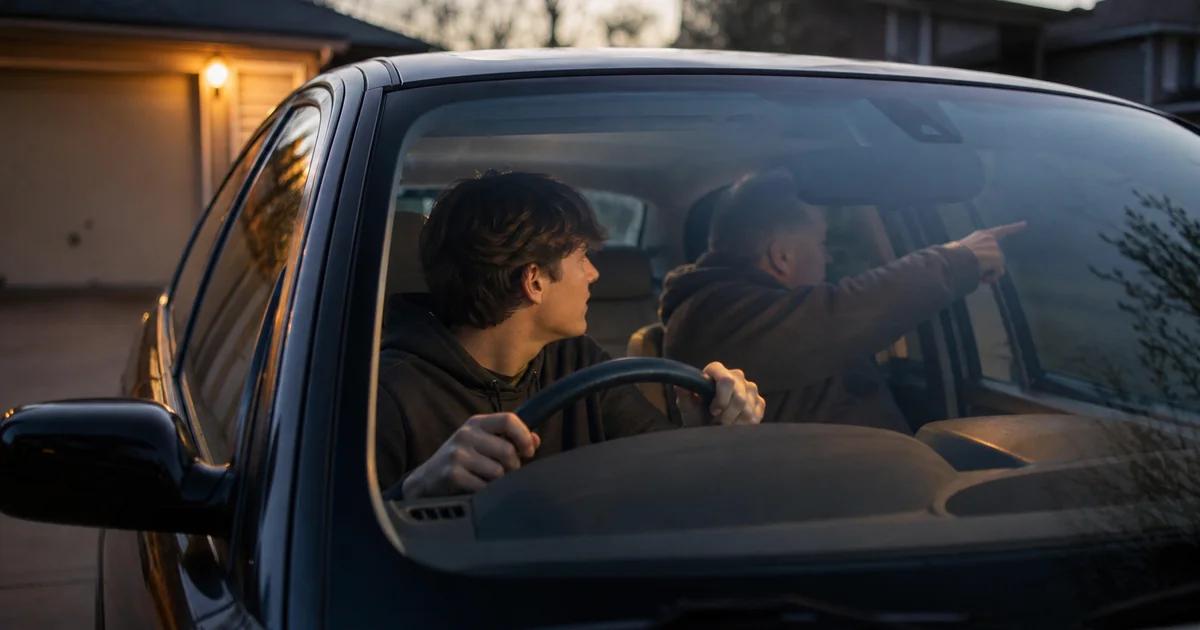
A permit driver can have passengers, but a licensed adult must be in the front passenger seat the whole time the car is moving. Every state sets its own rule for how old that adult has to be, how long they must have held a license, and how many other people can ride along.
The usual rule: a supervising driver who is at least 21, licensed for the vehicle, and seated beside your teen. California wants the adult to be 25 or a parent. North Carolina wants five years of licensed driving. New York and New Jersey cap young passengers. The table below covers the 10 largest states, with a link to each state's own page.
Does a permit driver need an adult in the car?
Yes. A learner's permit does not allow solo driving. The California DMV puts it plainly: an instruction permit "does not let you drive alone at any time," including the drive to the road test.
What the states agree on:
- The supervising driver must hold a valid license for the kind of vehicle your teen is driving.
- The supervising driver must sit in the front passenger seat, or in the words of the Florida statute, occupy "the closest seat to the right of the driver."
- The supervising driver has to be able to take the wheel. California's page says the adult "should be positioned to allow them to take control of the vehicle, if needed."
States differ on the adult's minimum age and experience, and on the back seat.
Who is allowed to supervise a permit driver?
In most large states, any licensed driver who is at least 21 qualifies. Texas, Florida, New York, Illinois, Georgia, and New Jersey all set 21 as the floor. Some add an experience requirement:
- Illinois requires the supervisor to have held a license for the vehicle class "for at least one year," per Public Act 102-0165.
- New Jersey requires "a minimum of three years driving experience" and a valid New Jersey license, per the NJ MVC.
- North Carolina requires a supervising driver "who has been licensed for at least five years," per G.S. 20-11.
Two states restrict who can supervise more tightly:
- California limits practice driving to a "parent or guardian," a "California driver 25 years old or older," or a "certified driving instructor," per the DMV instruction permit page. A 21-year-old sibling does not qualify.
- Ohio splits the rule by the teen's age. Under 16, the Ohio BMV requires "a parent, guardian or licensed driving instructor in the passenger seat." At 16 or older, "any valid licensed driver over the age of 21" can supervise, except from midnight to 6 a.m., when a parent, guardian, or custodian has to be the one in the seat.
The Michigan Secretary of State says Level 1 drivers "must be supervised at all times by a licensed parent, legal guardian, or designated driver age 21 or older."
Can a permit driver have passengers in the back seat?
In most of these states, yes, as long as the supervisor is in front and every seat has a belt. North Carolina's statute says "No person other than the supervising driver can be in the front seat" and every occupant "must have a safety belt properly fastened." Texas, Florida, Georgia, Illinois, and Michigan set no passenger cap at the permit stage. Their caps start with the provisional license.
Two of the largest states do limit passengers during the permit phase:
- New York allows "no more than one passenger under the age of 21 unless the passengers are members of your immediate family," per the NY DMV. The cap lifts when the supervisor is a parent, guardian, or driving instructor. The DMV also says "the only passenger in the front seat is your supervising driver."
- New Jersey allows "Parent(s), guardian(s) or dependent(s)" as passengers and "Only one additional passenger is allowed unless accompanied by a parent or guardian," per the NJ MVC.
Why the caps? NHTSA's review of GDL passenger limits reports that in naturalistic driving data, the most common behavior before a teen crash was attending to passengers. NHTSA counts 46 states plus D.C. with passenger limits for provisional license holders, and says limiting young passengers to none or one "significantly decreases crash risk and injuries." A quiet back seat is the safer practice run even where the law allows more.
Permit driver passenger rules in the 10 largest states
Rules change. Each row links to the DMV page or statute it came from. Pennsylvania's DMV pages could not be read for this post, so New Jersey, the next largest state, takes its place.
State | Supervisor must be | Where the supervisor sits | Passenger limit at the permit stage | Source
California | Parent or guardian, a California driver 25 or older, or a certified instructor | Positioned to take control | None listed for permit holders | CA DMV
Texas | Licensed adult 21 or older | Front passenger seat | None listed | Texas DPS
Florida | Licensed driver 21 or older | Closest seat to the right of the driver | None listed | Fla. Stat. 322.1615
New York | Licensed supervising driver 21 or older | Only front-seat passenger | One passenger under 21 unless immediate family | NY DMV
Illinois | Licensed driver 21 or older, licensed at least one year | Seat beside the driver | None listed | 625 ILCS 5/6-105
Ohio | Under 16: parent, guardian, or instructor. 16 and up: licensed driver over 21 | Passenger seat | None listed | Ohio BMV
Georgia | Licensed Class C driver 21 or older | Seat beside the driver | None listed | Georgia DDS
North Carolina | Licensed for at least five years | Front seat, and no one else in front | Belts for every occupant | G.S. 20-11
Michigan | Licensed parent, guardian, or designated driver 21 or older | Not specified on the page | None listed for Level 1 | Michigan SOS
New Jersey | Licensed NJ driver 21 or older with three years of experience | Front seat | Parents, guardians, dependents, plus one more | NJ MVC
"None listed" means the state page sets no passenger cap for permit holders. Seat belt laws still apply, and provisional license caps start the day your teen passes the road test.
Are there time-of-day limits for permit drivers?
Several states restrict when a permit holder can drive:
- Florida: daylight only for the first three months, then until 10 p.m., per Fla. Stat. 322.1615.
- North Carolina: 5 a.m. to 9 p.m. for the first six months, then any time, per G.S. 20-11.
- Ohio: a parent, guardian, or custodian must supervise between midnight and 6 a.m., per the Ohio BMV.
- New York City: a permit holder "cannot drive in any of the five boroughs in New York City between the hours of 9 PM and 5 AM," and daytime driving in the city requires a vehicle with dual brakes, per the NY DMV. Nassau and Suffolk counties bar permit driving in the same overnight hours.
Can a permit driver drive out of state?
Sometimes, and the answer comes from the state you are driving into. New York's DMV says you "may drive outside New York State with your junior permit or permit if it is allowed by the laws of the other state," and you must follow that state's restrictions while there. The reverse applies: New York honors out-of-state permits for drivers 16 and older, but a permit holder under 16 "cannot drive in New York State."
Before a road trip, read the destination state's permit page. A supervising adult who qualifies at home may not qualify there (California's 25-or-parent rule is the obvious example).
What should the supervising adult actually do?
The law covers seating. Coaching is up to you. Three practices that hold up across the rules above:
- Keep the front seat for the supervisor only, and limit back-seat passengers in the first months even where the state allows more.
- Log the hours the state asks for. Michigan and New Jersey each require 50 supervised hours including 10 at night.
- Put the phone away. Texas bars "all cell phone use" for learner license holders, "including hands-free devices unless it's an emergency."
The harder question is what happens once the permit becomes a license and you are no longer in the passenger seat. A student driver sticker with a QR code lets other drivers rate your teen's driving in under 30 seconds, no app, no signup. Each rating lands in a private, time-stamped dashboard. It records what the public sees from behind the car, a different view from a GPS app or dash cam, and it does not track location. It is the feedback loop after the parent gets out of the car.
Frequently asked questions
Can a permit driver drive with friends in the car?
In most large states, yes, if a qualified supervisor is in the front seat and everyone wears a belt. New York caps it at one passenger under 21 outside immediate family. New Jersey allows one additional passenger beyond parents, guardians, and dependents unless a parent or guardian rides along.
Can a 21-year-old sibling supervise a permit driver?
In Texas, Florida, New York, and Georgia, a licensed 21-year-old qualifies. Illinois adds one year of licensed driving and New Jersey adds three. In California the sibling would need to be 25. In North Carolina, five years of licensed driving.
Does the supervising driver have to sit in the front seat?
Yes in every state here that addresses seating. Florida, Illinois, Georgia, Texas, North Carolina, New York, and New Jersey require the supervisor beside the driver. California requires the adult to be positioned to take control.
Do these rules still apply after my teen gets a license?
No. Permit rules end when the license is issued and provisional restrictions begin. Georgia, for example, allows "only immediate family members" as passengers for the first six months of a Class D license. Read the next stage before the road test, and see our guide on parent-teen driving agreements for house rules that outlast the state's.
Where to go from here
Print your state's permit page and keep it in the glove box with the permit. For the months after the license arrives, the student driver sticker keeps feedback coming when you are no longer in the car. The Individual plan is $49 a year for one sticker, the Family plan $99 a year for up to three vehicles. When your teen earns a full license, the same account switches to a new driver sticker. See the teens page for the program, and our post on student driver sticker requirements for the states that mandate a decal.
Sources
- NHTSA, GDL Passenger Limits for Young Drivers: https://nhtsa.gov/book/countermeasures-that-work/distracted-driving/countermeasures/legislation-and-licensing/gdl
- California DMV, Instruction Permit Requirements: https://www.dmv.ca.gov/portal/?p=4849
- Texas DPS, Teen Drivers Phase I, Learner License: https://www.dps.texas.gov/node/856
- Florida Statutes 322.1615, Learner's driver license: https://flsenate.gov/Laws/Statutes/2025/322.1615
- New York DMV, Learner Permit Restrictions: https://dmv.ny.gov/driver-license/learner-permit-restrictions
- Illinois Public Act 102-0165, 625 ILCS 5/6-105: https://ilga.gov/ftp/Public%20Acts/102/102-0165.htm
- Ohio BMV, Graduated Driver Licensing: https://bmv.ohio.gov/dl-gdl.aspx
- Georgia DDS, Section 6: Teen Driving Laws: https://dds.georgia.gov/book/export/html/33676
- North Carolina G.S. 20-11: https://www.ncleg.net/enactedlegislation/statutes/html/bysection/chapter_20/gs_20-11.html
- Michigan Secretary of State, Graduated Driver Licensing: https://www.michigan.gov/documents/sos/MI_GDL_Licensing_SOS380_515146_7.pdf
- New Jersey MVC, First Driver License: https://nj.gov/mvc/license/youngadult.htm
- Judge My Driving, Student Driver Sticker: https://judgemydriving.com/student-driver-sticker
- Judge My Driving, Pricing: https://judgemydriving.com/pricing
Ready to make the roads safer?
Get your Judge My Driving sticker and join thousands of drivers committed to accountability.